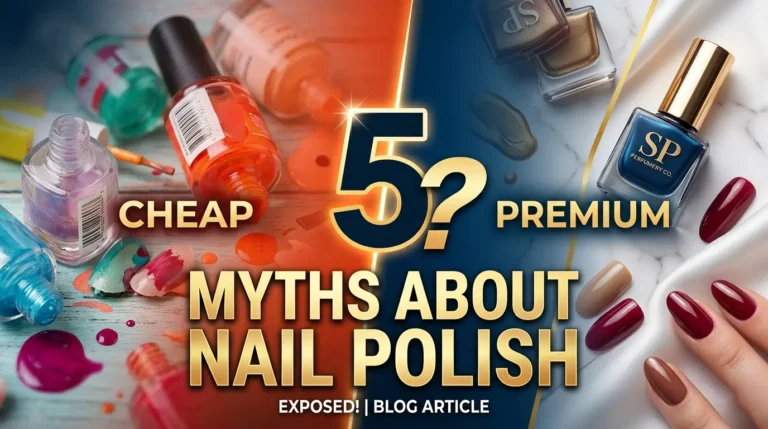

7 Reasons Cheap Nail Polish Stock Can Become Expensive Dead Inventory
It’s 10:00 AM on a Monday in Delhi’s busy Sadar Bazar. Ravinder, a wholesale cosmetics trader with 15 years in the business, is staring at 50 cartons stacked in the corner of his godown.
Three months ago, he thought he bagged the deal of the century: 5,000 units of ultra-cheap nail polish at just ₹12 a bottle from an unbranded local supplier. He planned to flip them for ₹25 to retailers across Uttar Pradesh and Haryana, expecting a quick ₹65,000 profit.
Fast forward to today:
- 10 cartons were returned because the polish separated into oil and pigment before reaching the counter.
- 15 cartons are stuck at retailers’ shops because customers complained the formula takes 15 minutes to dry and chips within hours.
- The remaining 25 cartons are sitting in his godown—thick, clumpy, and completely unsellable.
What seemed like a profit margin turned into ₹60,000 of tied-up capital, wasted shelf space, and damaged relationships with his top dealers.
Ravinder’s story isn’t unique. Across wholesale hubs in Mumbai, Bangalore, Jaipur, and Kolkata, distributors and traders fall into the “cheap inventory trap” every single day. On paper, low-cost stock looks like high margins. On the balance sheet, it often turns into expensive dead inventory.
Here are the 7 reasons cheap nail polish stock becomes a financial burden for your business—and how you can avoid it.
1. Fast Separation and Formula Breakdown
Cheap nail polish is manufactured using low-grade solvents and unrefined pigments. Within 30 to 60 days of sitting on a retail shelf or in a warehouse, the liquid separates.
A clear layer of solvent floats to the top while heavy pigment settles into a hard lump at the bottom. Once this happens, shaking the bottle won’t save it. Retailers return the stock, and you are left holding the loss.
2. High Return Rates Due to Performance Issues
Today’s Indian consumer—whether shopping at a high-end parlor in Mumbai or a local beauty store in a Tier-3 town—expects performance. If a nail polish takes 10 minutes to dry, streaks upon application, or chips off the next day, she won’t buy that brand again.
When end-customers complain, retailers push the stock back up the supply chain directly to you, demanding refunds or replacements.
3. Climate Sensitivity and Short Shelf-Life
India’s diverse weather poses a major challenge for cosmetics. A cheap formulation cannot withstand temperature fluctuations—from the scorching heat of Rajasthan summers to the high humidity of coastal regions like Chennai.
Without all-weather stable formulations, cheap nail polish dries up inside the bottle, thickens, or loses its gloss before it even reaches the end consumer.
4. Poor Brush and Cap Quality (Leakage & Drying)
Cost-cutting in cheap stock goes beyond the liquid inside. Manufacturers use sub-standard plastic caps that crack easily under minimal pressure and low-grade brushes with uneven bristles.
- Cracked caps lead to solvent evaporation, causing the polish to harden inside the bottle.
- Bad brushes result in streaky application, destroying consumer trust instantly.
A single leaking bottle in a dozen-pack carton can ruin the packaging of all 12 units, making the entire box unsellable.
5. Lack of Shade Consistency across Batches
Imagine your dealer in Ahmedabad reordering 20 dozen units of a popular “Nude Pink” shade, only to receive a batch that looks noticeably orange.
Unorganized manufacturers rarely maintain strict lab-batch testing or standard operating procedures. Inconsistent color matching confuses consumers and frustrates shopkeepers, who will stop placing repeat orders with you.
6. Trend Mismatch and Static Color Ranges
Low-cost regional manufacturers often copy trends from two years ago. They flood the market with outdated shades that shoppers no longer want, while high-demand textures—like gel-finish, pastel matte, or long-lasting gloss—are completely absent.
When stock doesn’t align with current consumer demand, it sits on the shelf until it expires, turning your liquid asset into literal scrap.
7. Damage to Your Market Reputation
This is the most expensive cost of all. As a wholesaler or distributor, your business relies entirely on trust.
When you supply unreliable, low-grade stock to your retail network, store owners lose faith in your judgment. Rebuilding lost credibility with a retailer takes years; losing it over a cheap ₹10–₹15 margin takes just one bad batch.
How Smart Distributors Build Long-Term Profitability
Kajal, a successful cosmetic distributor based out of Bangalore, operates on a different philosophy.
“I used to chase the lowest purchase price,” Kajal shares. “Then I realized that selling 1,000 units of stable, high-turnover polish at a steady margin makes me 5 times more money than buying 5,000 units of cheap stock where half ends up damaged or returned.”
Kajal shifted her strategy toward reliable, market-tested manufacturers with proven track records. By offering her retail network consistent quality, stable formulations, and on-trend shades, her return rate dropped to near zero, and her repeat order rate grew by 40% year-over-year.
The Formula for Zero-Dead-Inventory Growth
To protect your working capital and build a thriving cosmetics distribution business, evaluate your manufacturing partners using this 4-point checklist:
- Proven Manufacturing Heritage: Partner with manufacturers who specialize strictly in color cosmetics and have decade-plus experience handling all-weather Indian conditions.
- Wide Shade & Variant Palette: Ensure access to a comprehensive palette—from daily economy wear to premium salon finishes—so you can cater to every price segment.
- Packaging Reliability: Look for flexible packaging options (1, 2, 3 & 4 Dozen sets) with secure seals and quality brush applicators that prevent transit damage.
- Established Market Presence: Choose partners with verified track records across multiple states and wholesale networks, ensuring product formulas are market-tested at scale.
Protect Your Capital with SP Perfumery Co.
Don’t let low-grade inventory drain your margins and damage your trade reputation.
At SP Perfumery Co., we bring 21+ years of manufacturing specialization in color cosmetics, with nail polish as our core expertise. Having sold over 10+ Crore nail polish units across 24+ states, 177+ cities, and 211+ pincodes, we have helped our network of 13 distributors, 250+ dealers, and 1,000+ wholesalers generate over ₹200+ Crore in cumulative revenue.
Why India’s Top Cosmetics Wholesalers Trust SP Perfumery Co.:
- 1,500+ Market-Driven Shades & 150+ Variants: From daily economy shades to high-gloss premium gel finishes.
- 10 Registered Proprietary Brands: High-recall, trusted brands across all price segments (Note: We exclusively manufacture and sell our own registered brands; we do not offer private label or contract manufacturing).
- All-Weather Stable Formulations: Engineered to resist separation, drying, and climate damage across tropical conditions.
- Flexible Packaging: 1, 2, 3, and 4 Dozen options designed for safe transit and appealing shelf display.
Ready to Upgrade Your Wholesale Inventory?
Stop gambling your working capital on unbranded, risk-heavy stock. Partner with a brand that guarantees repeat demand and zero-defect consistency.
Contact our Trade Desk today:
- Call / WhatsApp: +91 88105 67775
- Evaluate Our Range: Request our official brand catalog and shade cards tailored for your state/region.
- Sample Testing: Paid sample kits are available upon request for quality verification before you place bulk trade orders.